How to Split a Small Campaign Budget Across Two or Three Audiences
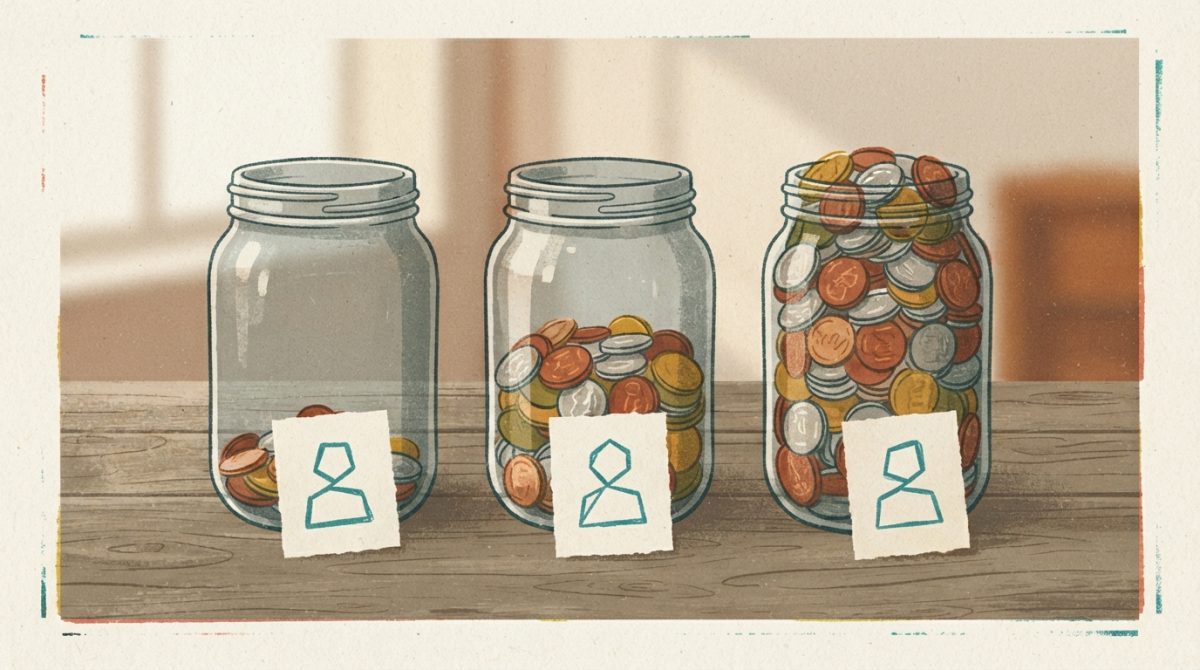
To split a small campaign budget across two or three audiences, rank the audiences by how close each one is to buying, give the closest audience the largest share, and fund each audience only if that share can buy enough results to learn from. If a share is too small to learn anything, cut that audience for now.
Populica is a campaign research and creative tool for small marketing teams and agencies: one research run drafts 8 to 16 buyer personas with their goals and objections, then carries them through a six-step campaign studio that ends in an exportable launch document with budget flow, KPI targets and channel mix. This guide is written for a founder, an in-house marketer or a small agency account lead who has one modest monthly budget and a list of two or three audiences that all look promising. The usual mistake with that setup is an even split, which feels fair to every audience but often leaves each one with too little money to produce a clear answer. The method below decides the split from the audiences themselves rather than from the arithmetic.
Why does an even budget split usually fail on a small campaign?
An even budget split fails on a small campaign because ad platforms need a minimum volume of results per ad set before delivery settles, and dividing a small budget by three can push every ad set below that volume at once. Meta's Business Help Center states that an ad set becomes "learning limited" when it is unlikely to receive about 50 optimization events in the week after the last significant edit, and lists low budget and small audience size among the causes (Meta Business Help Center, "About learning limited", accessed November 2026). Meta's own suggested fixes include combining ad sets and raising the budget. A campaign with three thin ad sets therefore risks three inconclusive results, where a campaign with one or two funded ad sets can return at least one answer the team can act on.
How do you rank audiences before deciding the split?
Ranking audiences before deciding the split means scoring each audience on a few questions the brief should already answer, so the budget follows evidence about the buyer instead of enthusiasm for a segment. The four questions in the list below come from the research a campaign brief collects: who the buyer is, what triggers the purchase and what stops it. An audience that scores well on all four is the core audience and gets the largest share; an audience that scores well on only one or two is a test audience. The ranking also makes the split easy to explain to a client or a founder, because each share points to a reason written in the brief rather than to a gut feeling.
- Trigger: does the audience have a clear moment that starts the search, as described in choosing ad channels from the buyer's trigger moment?
- Objection: does the campaign have a credible answer to the audience's main objection today?
- Reach: is the audience large enough on the chosen channel to generate results every week?
- Value: is one customer from this audience worth enough to justify the cost of reaching them?
What does a practical split for two or three audiences look like?
A practical split for two or three audiences gives most of the money to the audience the brief is most confident about and treats the rest as a bounded test with a clear stopping rule. The table below shows three common starting patterns for small campaigns. The percentages are illustrations for planning, not benchmarks from any platform or study, and each team should adjust them to the ranking above and to the cost of results on its own channel. The useful part of the table is the "when to use" column, because the right pattern depends on how much the team already knows about each audience before launch, not on the size of the budget alone.
| Pattern | Illustrative split | When to use it |
|---|---|---|
| Core plus one test | 70% core, 30% test | One audience is clearly ahead on trigger and objection; the second is a promising guess |
| Core plus two small tests | 60% core, 20% and 20% tests | The budget is large enough that each 20% share can still reach a usable volume of results |
| Two equal cores | 50% and 50% | Two audiences score the same and the campaign needs to find out which one leads |
| Single audience | 100% one audience | Any second share would be too small to learn from; the other audiences wait for the next campaign |
Not sure which of your audiences is closest to buying? Enter your company name and sector and get three buyer personas, each with the objection that is stopping them from buying. No account needed.
Draft my audience free →How do you check that each audience share is big enough?
Checking that each audience share is big enough means dividing the share by an expected cost per result and comparing the answer with the volume the channel needs to learn. As an illustration only, a test audience given $300 a month at an assumed $20 per lead buys about 15 leads a month, which on Meta sits far below the roughly 50 optimization events a week the Help Center describes for an ad set to exit learning. That gap does not make the test useless, but it changes what the test can answer: the team should optimize for a more frequent event, such as landing page views, or accept that the test will show direction rather than a stable cost. The real cost per result should come from the team's own account history or a short pilot, never from a borrowed average.
How does the campaign brief decide the split, not a template?
A campaign brief decides the budget split because the split depends on facts about these specific buyers, and a budget template cannot contain those facts. A budget template or an AI skill supplies method, such as a 70/30 rule or a spreadsheet with percentage columns, and that method is the same for you and for any competitor who downloads it. A campaign brief supplies knowledge the template cannot hold: which audience has an urgent trigger, which objection the campaign can already answer, and which buyer is worth more over time. An AI model asked to propose a budget split can only use the context it receives, so a brief that ranks the audiences produces a split with reasons attached. The full argument is in campaign brief vs prompt template, and the audience definitions themselves come from naming each target audience in one sentence.
When should you move budget between audiences during the campaign?
Moving budget between audiences during the campaign should follow a rule written into the brief before launch, so the team does not react to the noise of the first few days. The steps below keep the reallocation deliberate. Each step limits how often the budget changes, which matters because Meta treats budget changes of some sizes as significant edits that can restart learning for the ad set (Meta Business Help Center, "Last significant edit", accessed November 2026). Writing the rule down in advance also gives the client or founder a clear answer to the question every small campaign hears in week one, which is why the money is not all going to whichever audience looked best yesterday.
- Before launch, write the result each audience must reach and the date the team will judge it.
- Leave the split unchanged until that date unless an ad set is not spending at all.
- On the review date, compare cost per result and lead quality for each audience, not clicks alone.
- Move money from the weakest test to the core audience in one step rather than in small daily changes.
- Record the change and the reason in the launch document, as described in the campaign launch document checklist, and test the next message with the method in pressure-testing ad messaging before you spend the budget.
Populica's Free plan covers 1 company and 1 project with 1 audience research run, 10 AI creative drafts and 20 persona chat messages a month, no credit card required.
Start free →Frequently asked questions
How should I split a small ad budget across two audiences?
Rank both audiences by trigger, objection, reach and customer value, then give the stronger audience the larger share, for example 70% core and 30% test as a planning starting point. The split is an illustration, not a benchmark, and should be adjusted to the cost of results on your own channel.
Is it better to split the budget evenly across audiences?
An even split is rarely the best default on a small budget, because each share can end up too small to produce enough results to learn from. Meta says an ad set becomes learning limited when it is unlikely to get about 50 optimization events in the week after its last significant edit.
How many audiences should a small campaign test at once?
A small campaign should test only as many audiences as the budget can fund to a usable volume of results. Divide each share by your expected cost per result; if a share buys only a handful of results a week, drop that audience until the next campaign rather than spreading the budget thinner.
What does learning limited mean in Meta Ads Manager?
Learning limited is a delivery status Meta shows when an ad set is unlikely to receive about 50 optimization events in the week after its last significant edit. Meta lists small audience size and low budget among the causes, and suggests combining ad sets or raising the budget (Meta Business Help Center, November 2026).
When should I move budget from one audience to another?
Move budget on a review date written into the brief before launch, not after the first few days. Compare cost per result and lead quality per audience, then shift money from the weakest test to the core audience in one step, since some budget changes can restart Meta's learning phase.
What does Populica's Free plan include?
Populica's Free plan is $0 a month with 1 company, 1 project, 1 audience research run, 10 AI creative drafts and 20 persona chat messages per month, no credit card required. Paid plans are Starter at $19, Pro at $49 and Agency at $129 a month.
Keep reading
How to Write a Landing Page Brief That Matches the Ad It Comes From
Visitors arrive carrying the ad's promise in their head. A five-row table of what must carry over from ad to page, a five-step brief process, how many pages a small campaign needs and a quick pre-launch match check.
How to Find Customer Language for Ads Without Running Interviews
Six sources of customer language that need no interviews, a five-step method to turn them into a language bank, and three tests that separate real buyer words from marketing vocabulary.
How to Turn a Researched Persona Into Three Ad Headlines
One persona, three headlines, three different reasons to buy. A step-by-step method that uses the buyer's goal, trigger and objection, with a worked example and a way to choose which headline runs first.